01
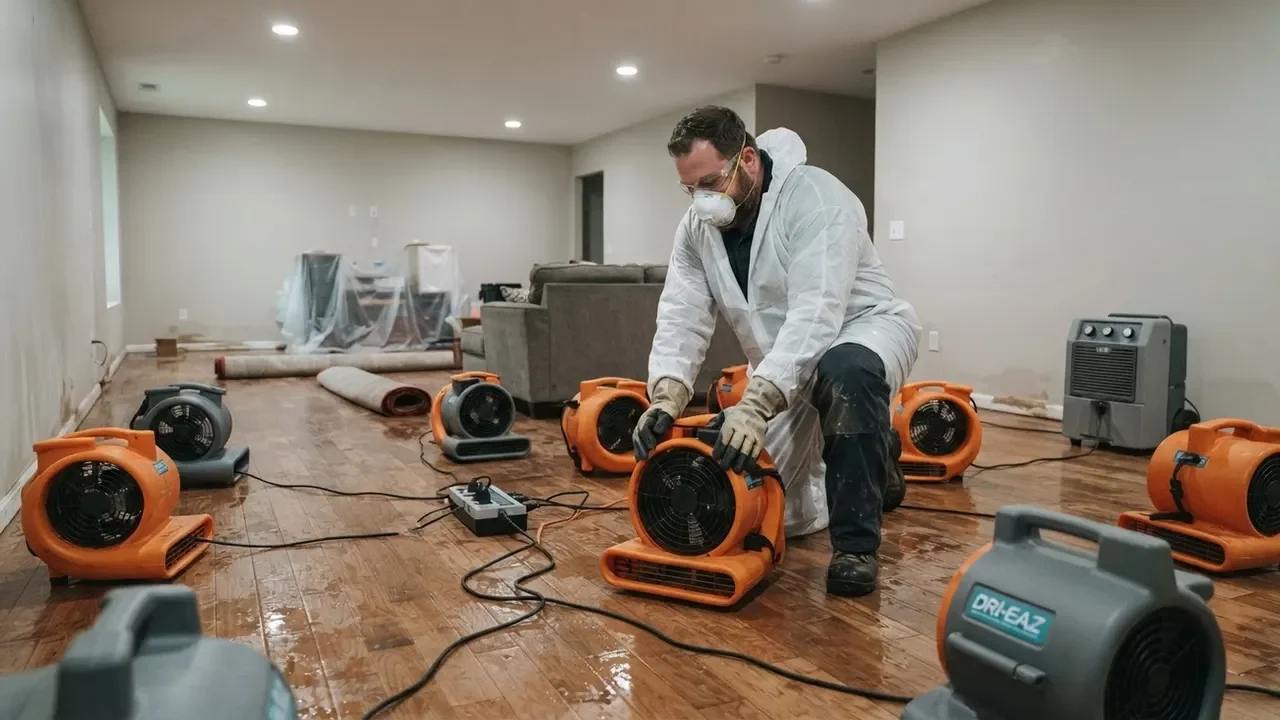
A Frozen Pipe Breaks Overnight and Leaves Water Beneath Flooring in a Bradford Home.
What we do: We start by identifying whether the pipe is still leaking and checking that the affected area is safe to enter. We extract standing water, inspect the floor edges and subfloor, and place drying equipment where readings show moisture. Follow-up checks tell us whether the water stayed in one room or traveled farther.
→ You get a controlled drying plan before swelling or hidden dampness is mistaken for a cosmetic floor problem. Readings help guide the repair sequence.
02
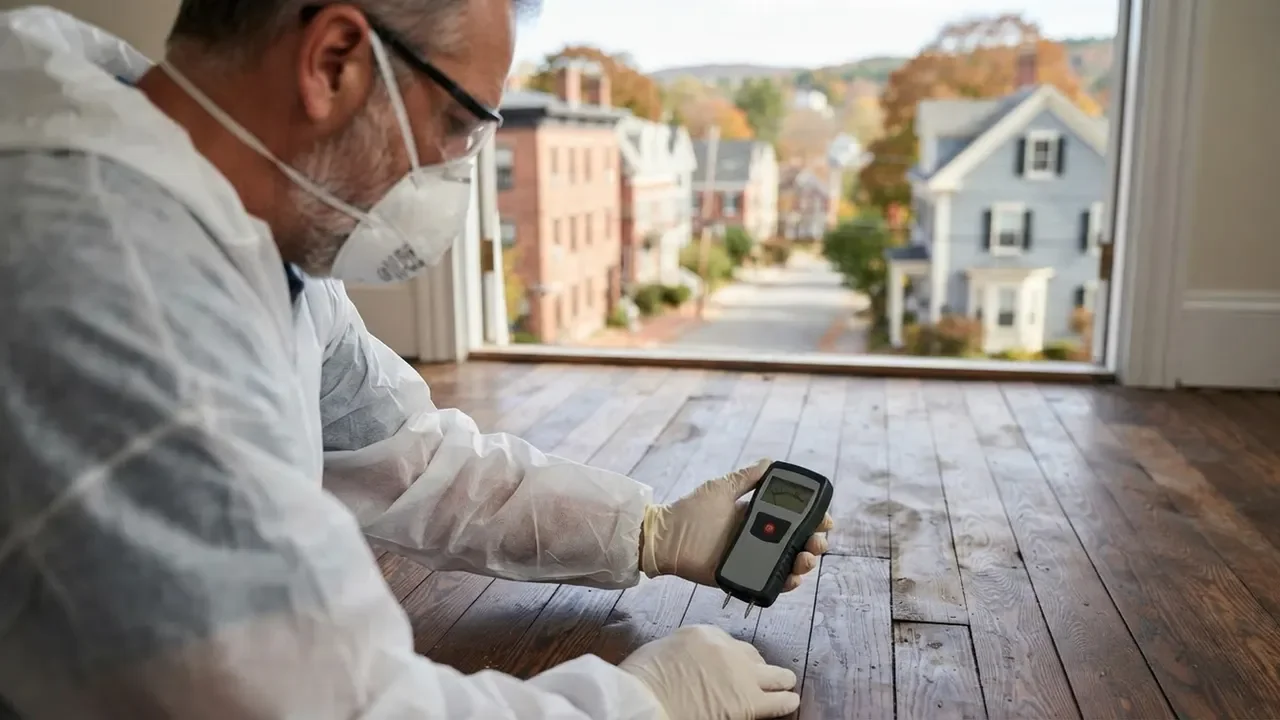
A Roof Leak Stains an Upstairs Ceiling After a November Storm Near Downtown Haverhill.
What we do: We confirm the active entry has been controlled, then check the ceiling, insulation, and nearby wall surfaces. Where safe access is available, we dry the assembly and monitor it before ceiling repairs. If the water source is still active, temporary protection must come before the drying setup can hold.
→ The affected ceiling is assessed beyond the stain, and repairs can be planned around documented drying progress rather than surface appearance.
03
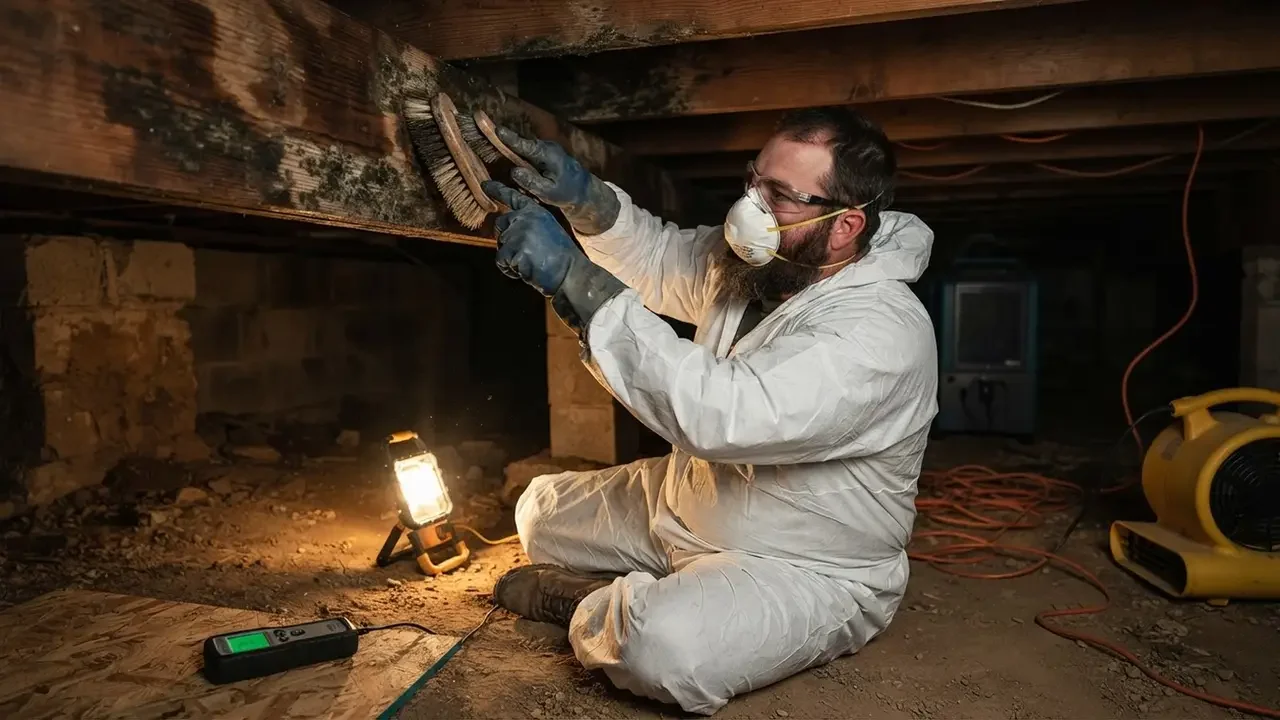
A Sump Pump Stops During Heavy Rain and Water Collects Across a Haverhill Basement Floor.
What we do: We remove accessible water, assess whether it contacted stored items or porous finishes, and check lower walls and flooring for retained moisture. We then position dehumidification and airflow according to the affected area. If contamination is suspected, we address cleaning and material safety before ordinary drying.
→ The basement moves from standing water to a monitored drying phase, with wet materials and next steps clearly identified.
04
A Commercial Water Line Leaks Overnight and Dampens a Hallway and Adjacent Work Area.
What we do: We identify the source, extract water, and assess the affected floor and wall assemblies. Equipment is positioned to preserve safe access where possible, and our team tracks readings as the space dries. Commercial dehumidification Haverhill work is planned around the water load, room size, and operational needs.
→ You can coordinate access and reopening decisions around measured progress instead of relying on a dry-looking surface.