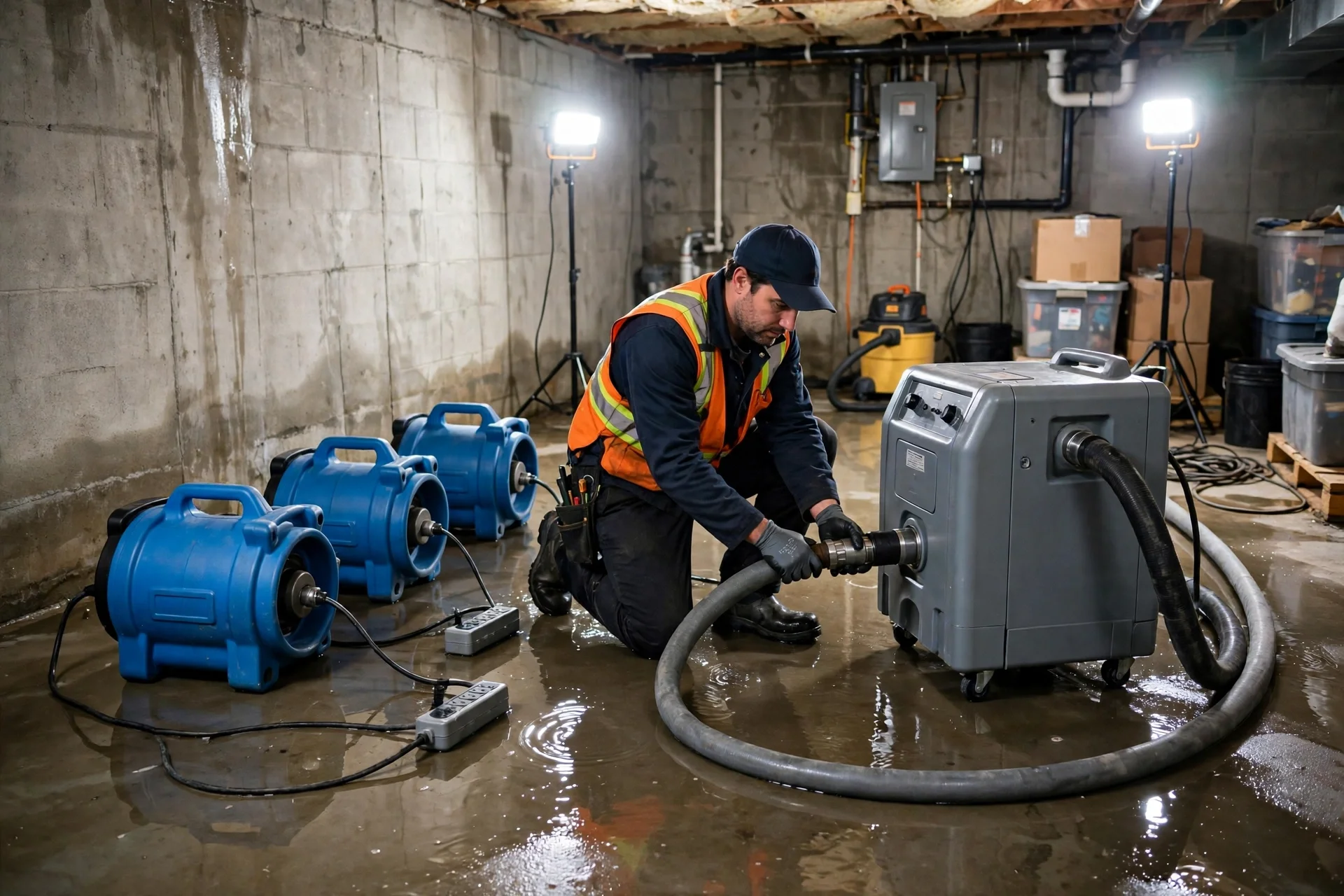
To dry out a flooded basement in Bradford, first stay out of standing water until you know the electricity is safe, then stop the water source, remove the water, and dry the structure with air movement and dehumidification. If the water is deep, contaminated, or has reached walls and insulation, bring in restoration equipment and moisture monitoring rather than relying on household fans. We'll walk through safe first steps, realistic drying times, common Bradford-area causes, and when our Haverhill team should take over.
How to dry out a flooded basement in Bradford is a water-damage recovery process that removes standing water and moisture from building materials before mold and structural deterioration develop. The order matters: safety first, extraction second, controlled drying third.
How Do I Dry Out a Flooded Basement in Bradford MA?
Drying a flooded basement in Bradford, Massachusetts, starts with electrical safety and stopping the water source, followed by extraction, removal of wet porous materials, and measured dehumidification. Don't step into water to reach a breaker or unplug equipment.
If you can reach the main breaker from a dry location and there is no sign of damage, switch off power to the basement. If the panel is in the wet area, call the utility or an electrician. Avoid touching a furnace, water heater, or appliance surrounded by water.
Once the area is safe, identify the source. A failed sump pump, burst supply line, drain backup, or rainwater intrusion calls for a different response. Shut off a leaking fixture or the home's water supply if you can do so safely. Keep children and pets out.
For a small amount of clean water, use a wet/dry vacuum only if the manufacturer permits the setup and the electrical supply is protected. For deeper water, use a pump intended for the job. Our water damage restoration Haverhill MA team handles extraction and drying for homes across Haverhill and Bradford, including basements where water has spread beneath stored items or floor coverings.
Document the damage before moving or discarding belongings. Photograph the water line, source, damaged materials, and affected contents; note when you first found the water. Then remove salvageable items to a dry, ventilated area and separate materials that are soaked or contaminated.
Why Bradford Basements Stay Wet After the Water Is Gone
Bradford basements can remain damp after visible water is removed because moisture sits inside concrete, framing, insulation, flooring, and wall cavities. A dry-looking slab does not prove the space has reached a safe moisture level.
Bradford's mix of older homes and newer construction means basements vary widely: some have unfinished stone or concrete foundations, while others contain finished walls, carpet, and storage built close to the floor. During November and winter, snowmelt, frozen or blocked drainage, and freeze-thaw cycles can add water around foundations; heavy rain and spring runoff create different pressure points.
Water can travel behind baseboards, wick up drywall, and soak the bottom of wood framing. Carpet padding holds water even after the surface feels dry. A dehumidifier in the middle of the room will not reliably dry a closed wall cavity or a saturated layer under flooring.
We check the full affected area, not just the puddle. Our crew uses moisture meters to compare wet materials with unaffected areas and tracks readings as the structure dries. If the basement has a drain or sump system that failed, identify the cause before putting belongings back.
In neighborhoods with older foundations and tight side yards, outside drainage can be difficult to correct without a careful look at where roof runoff and surface water go. Homes in nearby water damage restoration company Haverhill service areas face the same practical issue: water collects where grading, downspouts, or a sump system cannot move it away quickly enough. The right fix may involve correcting the source as well as drying indoors.
How Long Does It Take to Dry a Flooded Basement in Bradford?
A flooded basement in Bradford takes about 3 to 5 days to dry after a minor clean-water event, while wet drywall, insulation, or subflooring can extend drying to 7 to 14 days or longer. The amount of water, material type, and temperature all affect the timeline.
Extraction is often completed in hours, but structural drying is a separate phase. Concrete and masonry release moisture slowly; carpet, padding, and drywall can stay wet inside after the surface dries. We place air movers to circulate air across wet surfaces and commercial dehumidifiers to pull water vapor out of the room.
During the first day, the drying setup should reduce moisture without simply pushing damp air into other parts of the house. In cold weather, exterior doors and windows usually stay closed while equipment runs; opening them can introduce cold, humid air and make indoor conditions harder to control. A comfortable room temperature near 68-75°F helps many drying setups work efficiently, provided the heating system and electrical service are safe.
We monitor readings rather than guessing from touch or smell. You may see equipment run continuously for several days, and we adjust its placement as the wettest areas improve. Don't switch off equipment or move it unless the drying crew tells you to; airflow patterns are deliberate.
Our structural drying Haverhill MA service addresses moisture in building materials, not just damp air. That distinction is crucial if your basement has finished walls, a wood-framed floor, or a musty odor that remains after the standing water is gone.
What Drying Equipment and Repairs Does a Basement Need?
Bradford basement drying usually requires water extraction, air movers, a commercial dehumidifier, and moisture checks; contaminated water or soaked porous materials also require removal and cleaning. Equipment needs depend on the water source and how far it traveled.
A basic sequence looks like this:
- Extract: Pump or vacuum standing water, then remove water trapped in carpet and other accessible materials.
- Clear wet contents: Move furniture and boxes; remove saturated padding, damaged insulation, or materials that cannot be dried safely.
- Dry the structure: Position air movers and dehumidifiers to move air across affected surfaces and control humidity.
- Verify: Take moisture readings in the affected materials and confirm they are approaching the levels of comparable dry areas.
- Repair: Replace removed materials only after drying is complete and the original water source is addressed.
If water came from a sewage backup, a drain, or outdoor flooding, treat it as potentially contaminated. Don't use a household vacuum or handle soaked porous items without protection. Contamination can change what needs to be discarded, cleaned, and disinfected.
Carpet and pad often need separate decisions. A small amount of clean water caught quickly may be recoverable with prompt extraction and drying, but dirty water or prolonged saturation usually means the pad must go. Drywall that has absorbed water may need a controlled cut to inspect the cavity; removing too little can leave wet insulation hidden behind the finished surface.
For basement water removal in Bradford, Massachusetts, the goal is to remove water without damaging the foundation or spreading it to clean areas. We also look for the cause-such as a failed sump pump, leaking pipe, or a window well filling during a storm-so the same puddle doesn't return after repairs.
Common Mistakes During Bradford Basement Flood Cleanup
Bradford basement cleanup goes wrong when people enter electrically unsafe water, dry only the visible surfaces, or cover damp materials before confirming they are dry. Those shortcuts can turn a manageable cleanup into a larger repair.
Never assume water is safe because it looks clear. A basement floor drain can back up without obvious debris, and water that entered from outdoors may carry soil or other contaminants. If you don't know the source, keep people away from it until it has been assessed.
- Using a regular vacuum: A standard household vacuum is not designed for standing water and creates shock risk.
- Relying on one small dehumidifier: A residential unit may not keep pace with wet framing, concrete, or multiple rooms.
- Sealing the room too soon: Replacing baseboards or flooring over damp materials traps moisture.
- Leaving wet boxes in place: Cardboard absorbs water and blocks airflow against walls and floors.
- Ignoring the source: Drying without repairing the sump, plumbing, or drainage problem invites repeat damage.
Bleach is not a substitute for removing wet materials or drying a wall cavity. Don't spray chemicals into a closed space and assume the underlying moisture is gone. If you see visible growth, notice a persistent musty smell, or find wet insulation, pause demolition and have the area assessed.
When to Call a Professional in Bradford
Call a water damage professional in Bradford when standing water is more than a shallow, clean spill, when water may be contaminated, or when it has reached walls, insulation, finished flooring, or electrical equipment. A quick assessment can prevent hidden moisture from being missed.
Our emergency water extraction Haverhill MA team removes standing water and sets up drying equipment for affected basements. We check moisture in floors and walls, identify areas that need opening, and keep the drying process moving with follow-up measurements.
Call for help promptly if water is still entering, the sump pump has failed, a pipe has burst, or you cannot safely reach the breaker. We also recommend professional cleanup for water that has backed up through a drain or entered from outside, since the cleanup and disposal approach differs from clean supply water.
We can help you document the damage for your insurer and explain what our crew finds. Coverage depends on the policy and cause; sudden plumbing failures may be treated differently from surface flooding or groundwater. Keep receipts and photographs, and contact your insurance company early.
For local Bradford basement flood cleanup, Haverhill Water Damage Restoration can coordinate extraction, drying, and repair planning. We give you one clear price for the work before proceeding, then explain what needs to happen next.
Frequently Asked Questions
How Do I Dry Out a Flooded Basement in Bradford MA?
First make sure the power is safe, stop the water source, and remove standing water; then dry affected materials with air movers and dehumidification for several days. If water is deep, contaminated, or inside walls, call a restoration team to handle extraction and monitor moisture.
How Long Does It Take to Dry a Flooded Basement in Bradford?
Most minor clean-water losses take about 3 to 5 days to dry, while saturated walls, insulation, or subfloors can take 7 to 14 days or more. The crew should verify moisture readings before equipment comes out or repairs cover the affected materials.
Does Insurance Cover Flooded Basement Cleanup in Bradford Massachusetts?
Coverage depends on the cause and your policy; a sudden burst pipe may be covered, while groundwater or surface flooding often requires separate flood coverage. Photograph damage, save cleanup receipts, and report the loss promptly so your insurer can explain applicable terms.
Who Should I Call for a Flooded Basement in Bradford MA?
Call a water damage restoration company for extraction and structural drying, and call an electrician if water has reached electrical equipment. For active plumbing leaks, shut off the supply if safe and arrange repair of the source as well as cleanup.
How Much Does Flooded Basement Cleanup Cost in Bradford?
a small, limited basement cleanup may vary while significant extraction, drying, material removal, and repairs can vary. The water category, affected area, drying time, and reconstruction needs drive the final cost.
Get Help With Water Damage Restoration in Haverhill
A flooded basement needs more than dry floors; it needs the source fixed and hidden moisture measured before repairs begin. Call Haverhill Water Damage Restoration at (833) 546-4116 for help with basement extraction and drying in Bradford and Haverhill.